
✓ Updated September 2026
Disclosure: As an Amazon Associate, iTechDeals earns from qualifying purchases. If you buy through links on this page we may earn a small commission — at no extra cost to you.
3D printers in 2026 have stopped being hobbyist toys and become genuinely useful household tools — print spare parts, custom organisers, and gifts in hours. These five are the 3D printers worth buying on Amazon UK.
Quick Picks: Our Top 5 at a Glance
| Rank | Product | ||
|---|---|---|---|
| #1 |  |
Bambu Lab P1SBest Overall 3D Printer | Check Price |
| #2 | 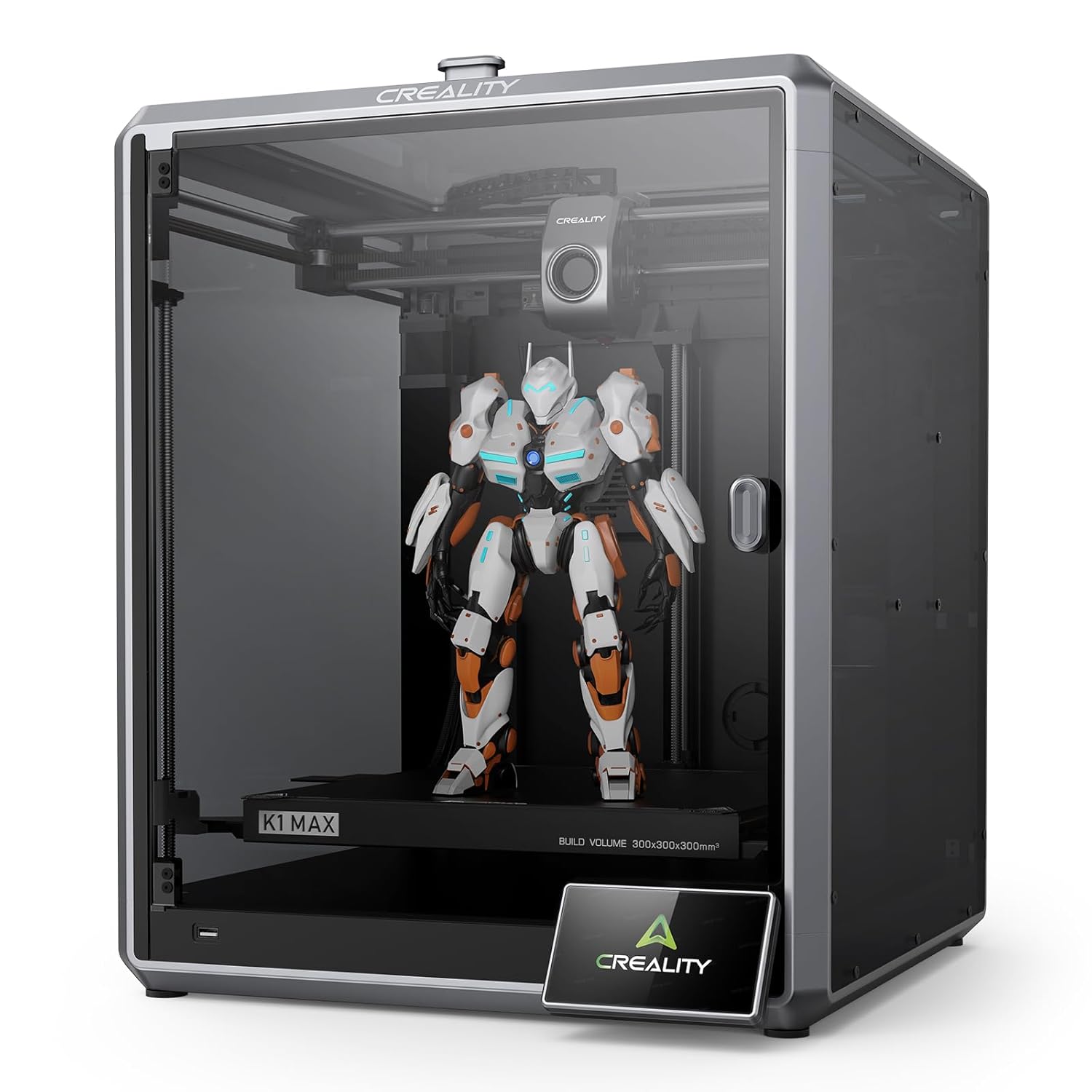 > > |
Creality K1 MaxBest Large-Format Printer | Check Price |
| #3 | 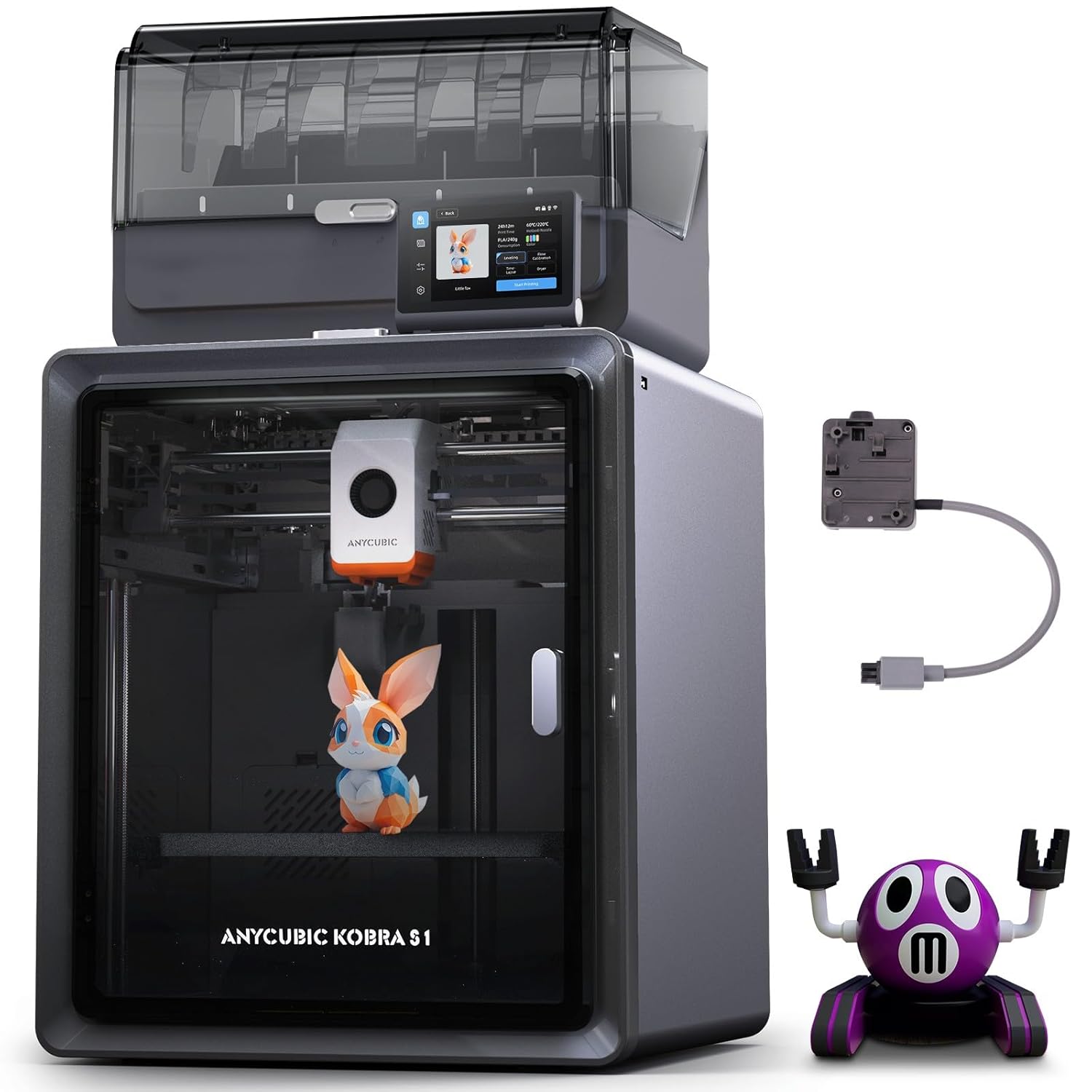 > > |
Anycubic Kobra 3Best Mid-Range Printer | Check Price |
| #4 | 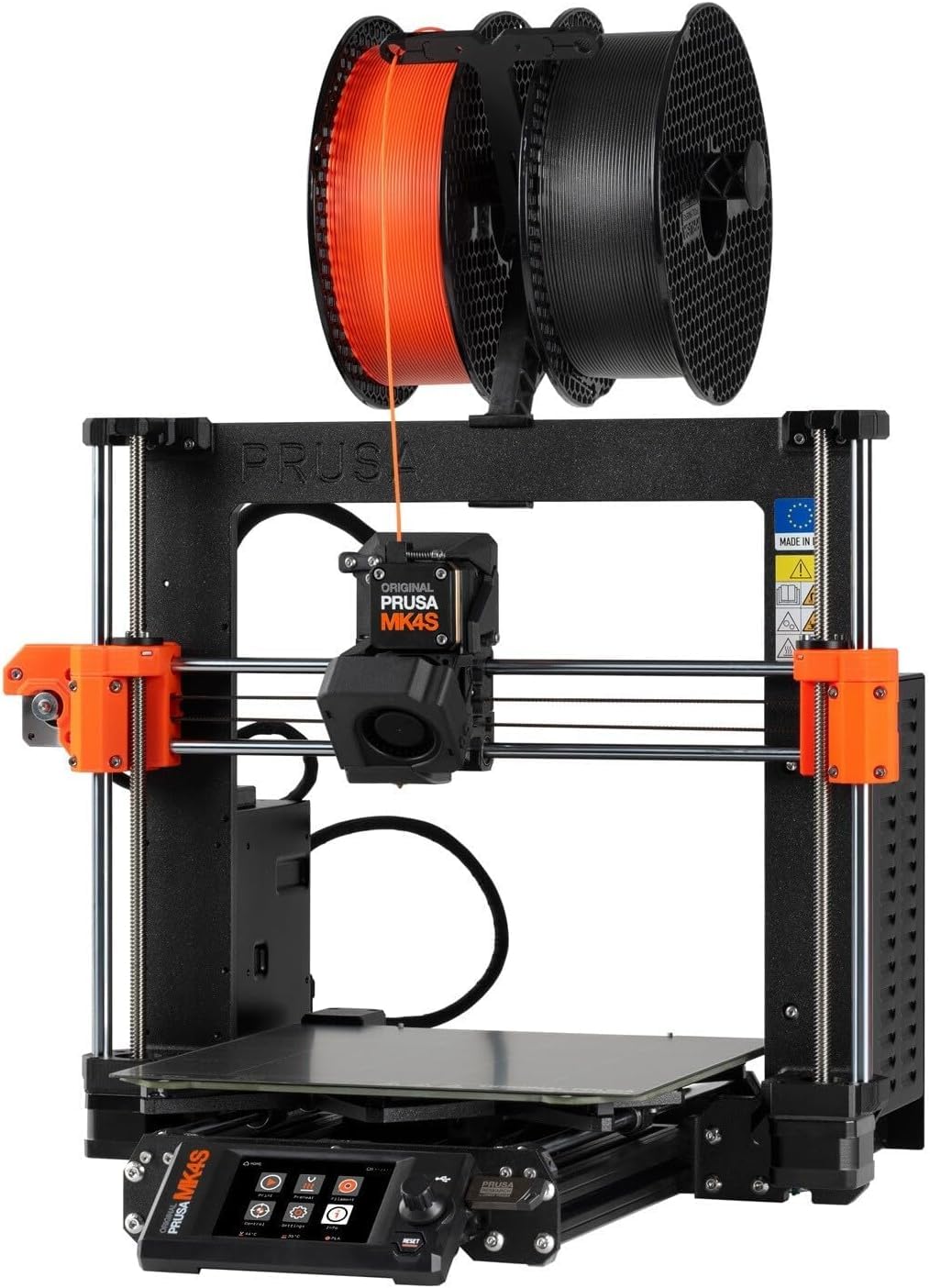 > > |
Prusa MK4SBest Open-Source Printer | Check Price |
| #5 | 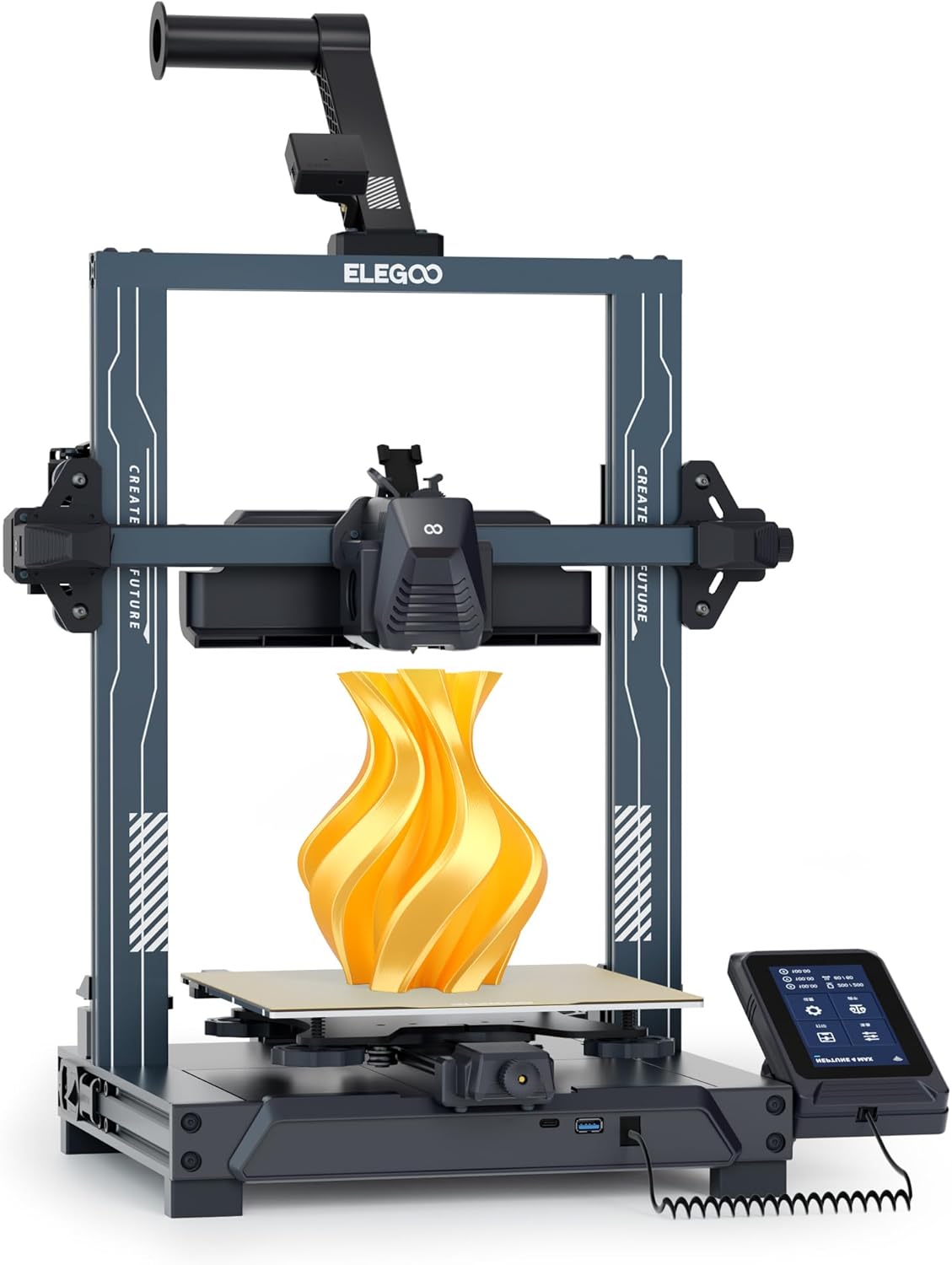 > > |
Elegoo Neptune 4 ProBest Budget 3D Printer | Check Price |
The Full Rankings & Reviews
Bambu Lab P1S
Best Overall 3D PrinterBambu Lab disrupted the 3D printing industry, and the P1S is why. CoreXY motion system, enclosed build chamber, AMS multi-material support, and prints 5-10x faster than older Creality machines. Set-up takes 20 minutes and the first print works on the first try. Bambu Studio software is the most polished slicer ever made.
Pros
- 5-10x faster than older printers
- Enclosed chamber for ABS/ASA
- First-print success rate near 100%
- Best slicer software
Cons
- Premium price
- Multi-colour AMS unit is a separate purchase
- Cloud features require Bambu account
Creality K1 Max
Best Large-Format PrinterWhen you need to print big — full helmet pieces, large prop replicas, multiple parts at once — the Creality K1 Max delivers. 300×300×300mm build volume, CoreXY system, AI camera that detects print failures and pauses automatically. Less polished than Bambu but the build volume advantage is real.
Pros
- Massive 300³mm build volume
- AI failure detection
- Open-source firmware
- Good value for the size
Cons
- Less polished than Bambu
- Louder cooling fans
- Software lags Bambu Studio
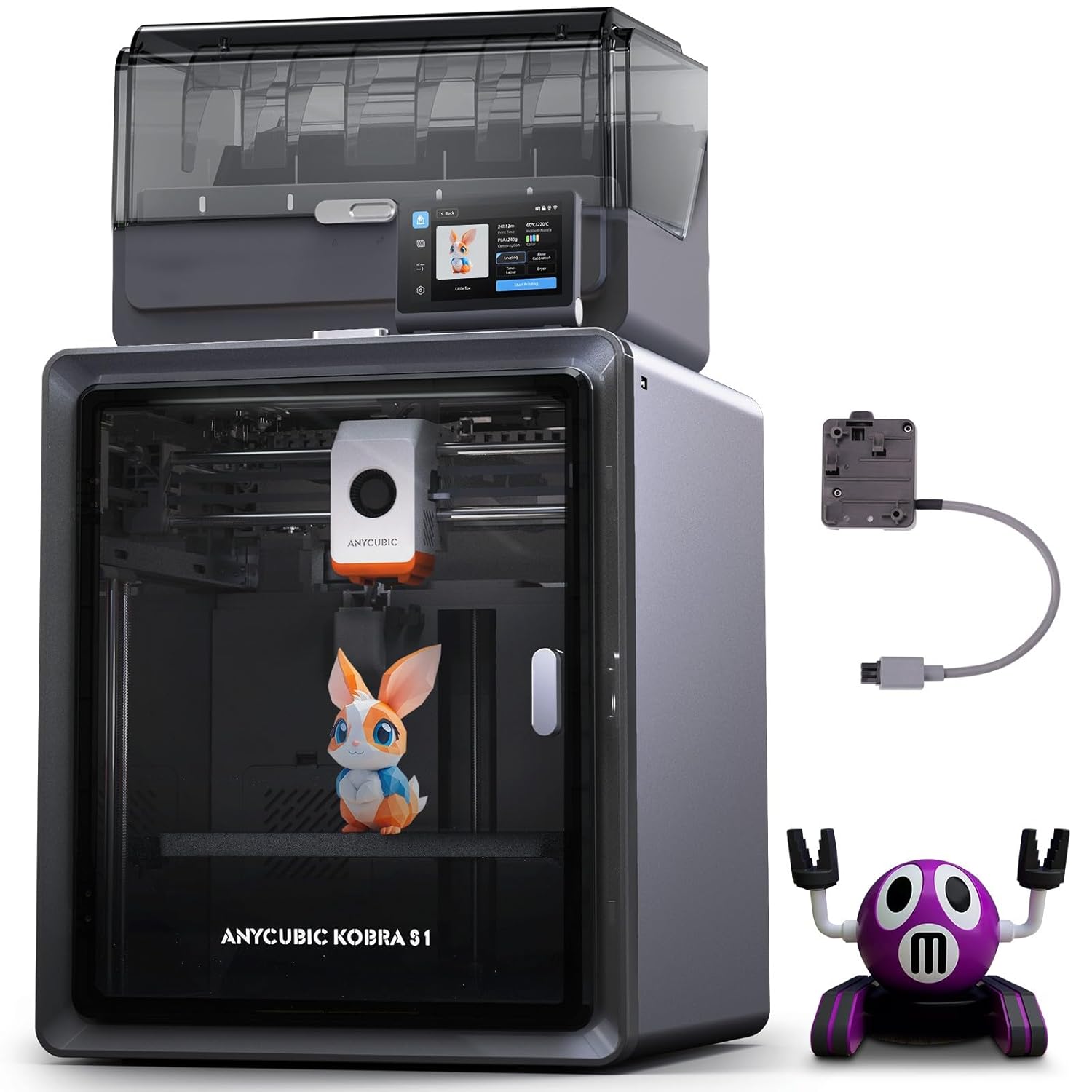
Anycubic Kobra 3
Best Mid-Range PrinterAnycubic’s Kobra 3 hits the sweet spot — 600mm/s print speeds, Klipper firmware, multi-colour optional add-on, and a competitive price point. PEI build plate is excellent for adhesion. Best choice if you want Bambu-like speed without paying Bambu prices.
Pros
- 600mm/s print speeds
- Klipper firmware
- Optional multi-colour kit
- Fair pricing
Cons
- Multi-colour add-on costs extra
- Less ecosystem polish than Bambu
- Smaller user community
Prusa MK4S
Best Open-Source PrinterPrusa is the open-source 3D printer maker — every part is documented, replaceable, and upgradeable. The MK4S is slower than Bambu but built to last 10+ years with maintenance. Czech-made, fully assembled or kit form. Print quality at low speeds is benchmark for the industry.
Pros
- Truly open source — repair forever
- Best print quality at slow speeds
- Czech build quality
- Kit option saves money
Cons
- Slower than Bambu/K1
- Premium price for premium quality
- Smaller default build volume
Elegoo Neptune 4 Pro
Best Budget 3D PrinterSub-£300 3D printers used to be junk. The Elegoo Neptune 4 Pro changed that. Klipper firmware, 500mm/s speeds, dual Z-axis lead screws for stability, PEI flex plate. It’s not as automated as Bambu — you’ll level the bed manually occasionally — but for first-time 3D printing, it’s an unbeatable starting point.
Pros
- Klipper firmware at this price is rare
- 500mm/s speeds
- PEI flex plate
- Active Elegoo community
Cons
- Manual bed levelling
- No enclosed chamber
- Smaller build volume than Kobra 3
Our Verdict
For most UK 3D printing buyers, the Bambu Lab P1S is the easy choice — fastest learning curve, near-perfect first prints, and the most polished software. Big projects need the Creality K1 Max. Open-source enthusiasts should pick Prusa MK4S. Beginners should start with Elegoo Neptune 4 Pro.
Check the Winner on Amazon →Frequently Asked Questions
Is 3D printing actually useful at home?
Yes, if you print things you’d otherwise buy. Custom organisers, replacement plastic parts (broken hooks, knobs, brackets), miniatures for gaming, prototypes. If you only print decorative trinkets, the novelty wears off.
What materials can these printers handle?
All printers in this list handle PLA (easy, biodegradable). PETG, ASA, and ABS need an enclosed chamber (P1S, K1 Max). Nylon and carbon-fibre composites need higher temps — most consumer printers can’t handle these.
How much does 3D printing cost in materials?
PLA filament is around £15-£20 per kg, which prints roughly 200 medium-sized objects. Less than 10p per print for typical hobby use.
Last updated: April 2026. Prices and availability may change — we recommend checking current Amazon UK listings before purchase.